THE UNIVERSITY of KANSAS
Kansas Biological Survey & Center for Ecological Research
  • myKU
  • Email
  • Canvas
  • Enroll & Pay
  • Jayhawk GPS
Main navigation
  • Home
  • About Select to follow link
    • Who we are
    • A very brief history
    • Mission
    • Our programs and services
    • Strategic plan 2025–2030
    • Our research center newsletter
  • Research Select to follow link
    • Programs and services
    • Our research mission
    • Publications List
    • List of research grants
    • Student Research Awards program
  • Public outreach programs
  • KU Field Station Select to follow link
    • Welcome to the KU Field Station
    • About the KU Field Station
    • Research at the Field Station Select to follow link
      • About research at the Field Station
      • Facilities and research support
      • Rules, fees and applications for use
    • Travel awards for external researchers
    • Armitage Education Center
    • Nature trail system
    • Education & outreach
  • People Select to follow link
    • Directory
    • Administration
    • Resources for our researchers, staff & students
  • Contact
  • News & media
  • Make a gift

Info
  • Resources for our researchers, staff & students
  • Our research center newsletter
  • Friday Ecology Seminars
  • Public outreach programs
  • myKU
  • Email
  • Canvas
  • Enroll & Pay
  • Jayhawk GPS
THE UNIVERSITY of KANSAS
University of Kansas logo
Kansas Biological Survey & Center for Ecological Research
Home

Prairie Park prairie, Sept. 27, 2023

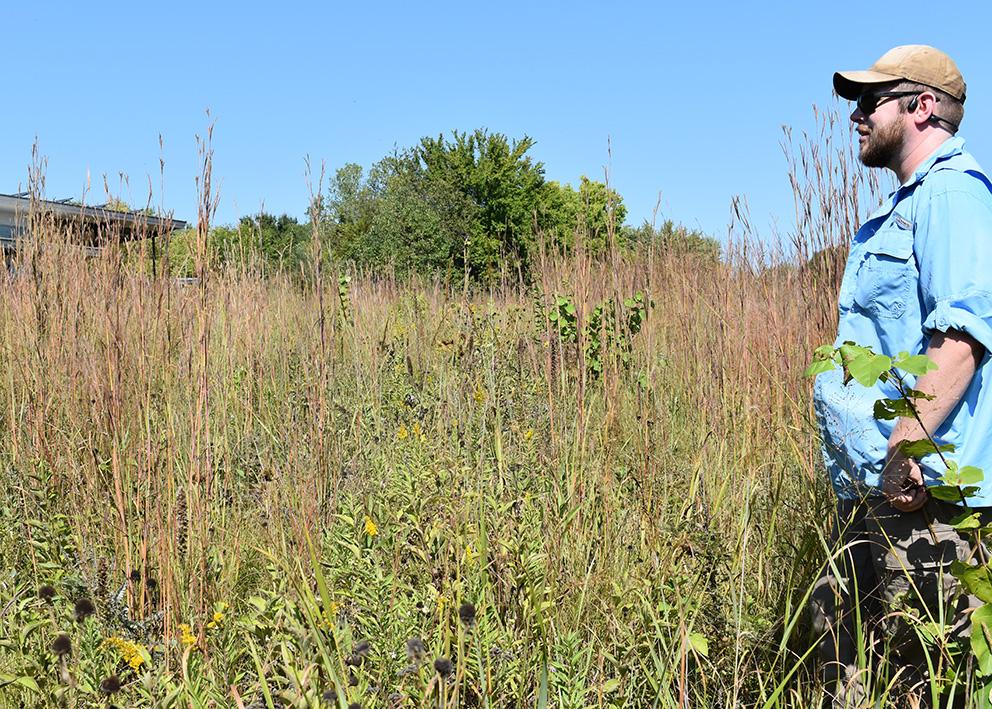
KU researchers Nathaniel Weickert and Caleb Morse returned to the Prairie Park prairie for a third survey on Sept. 27, 2023. Clear lines of forbs, missed by the herbicide sprayer in spring, were blooming. There were large patches of mostly bare ground, unusual in tallgrass prairie. Some individual plants had resprouted. Click on any image to enable scrolling through images and reading captions.
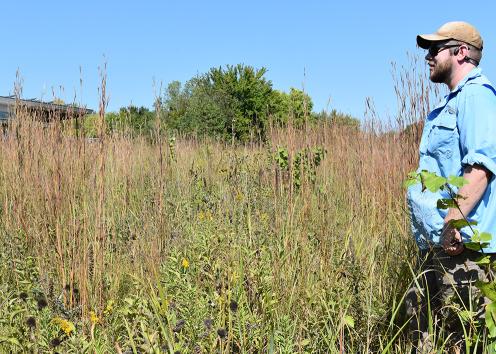
Researcher standing in field with tall grass and flowers
Close
Researcher standing in field with tall grass and flowers

Visible line of forbs (wildflowers) missed by herbicide.

Previous Next
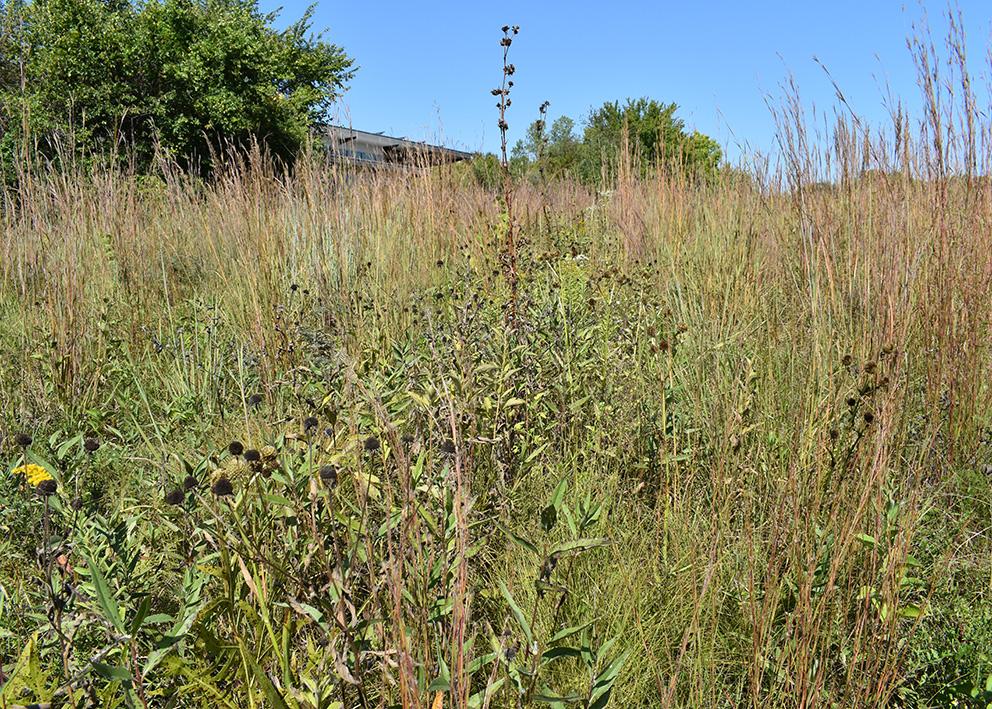
Wildflower plants in late-season stage with tallgrass on each side of them
Close
Wildflower plants in late-season stage with tallgrass on each side of them

Another view of a line of forbs missed by herbicide; species here (such as compass plant, two sunflower species, tall goldenrod and rattlesnake master, among others) at proper stage.

Previous Next
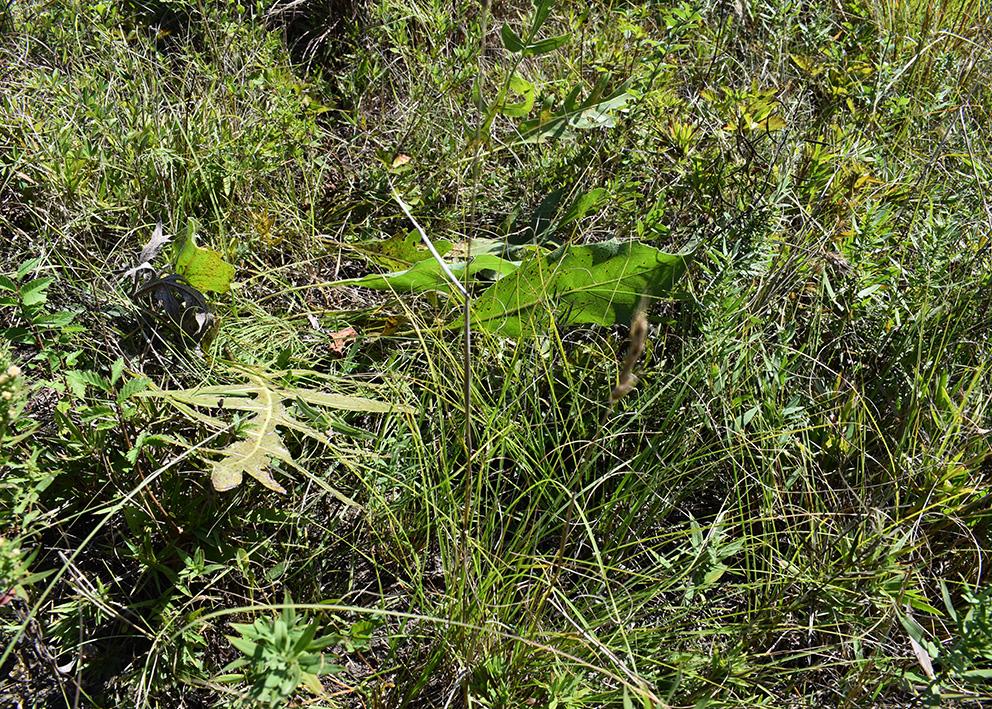
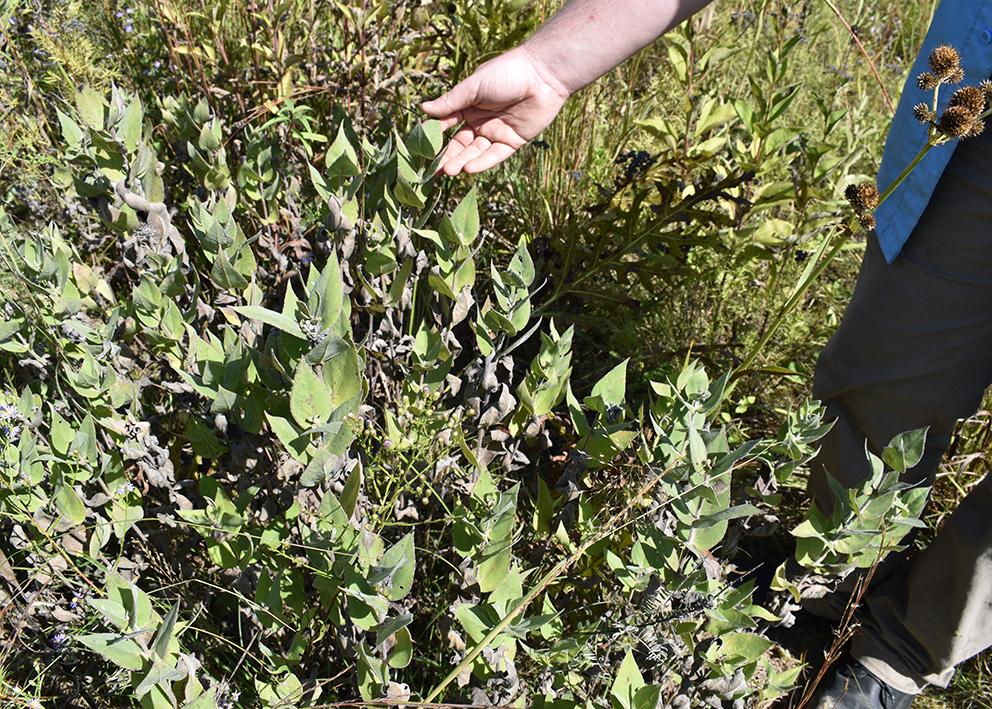
Close-up of flat leaves of compass plant
Close
Close-up of flat leaves of compass plant

A compass plant that survived but did not flower in 2023.

Previous Next
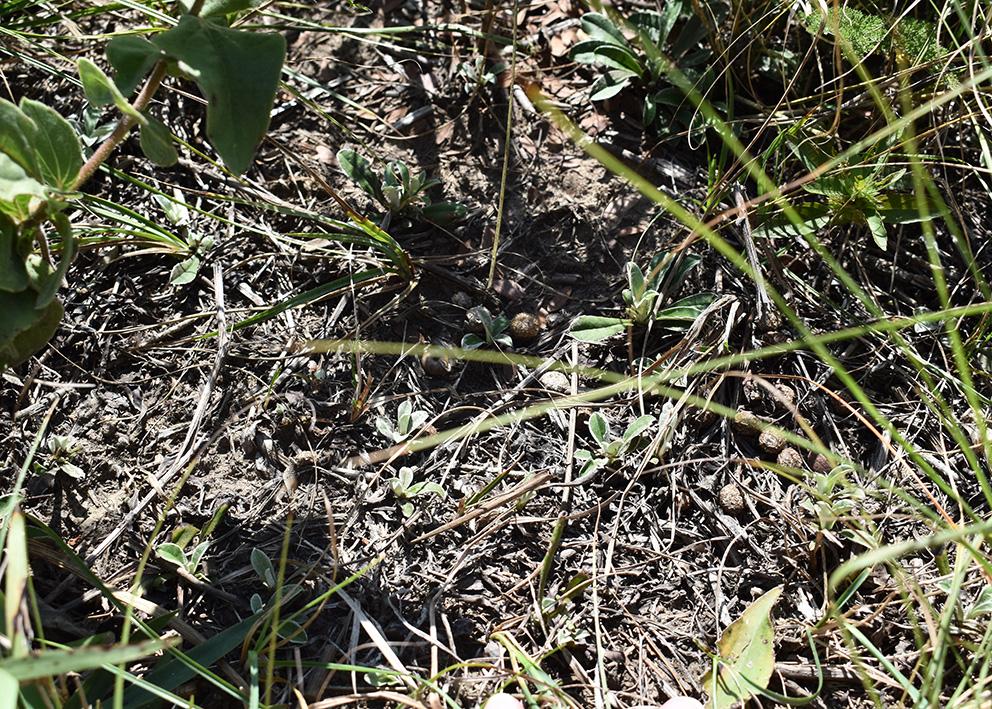
Small rosette plants on mostly bare ground
Close
Small rosette plants on mostly bare ground

Field pussytoes on mostly bare ground.

Previous Next
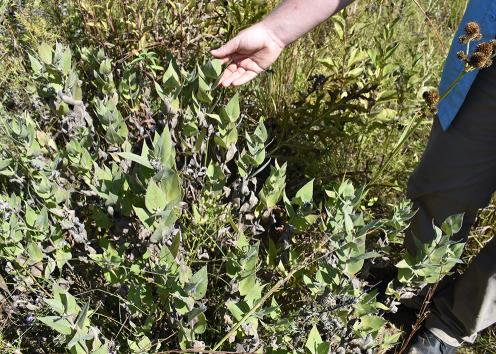
Patch of ashy sunflower plants
Close
Patch of ashy sunflower plants

Ashy sunflower patch at proper stage for time of year in one of the unsprayed patches.

Previous Next
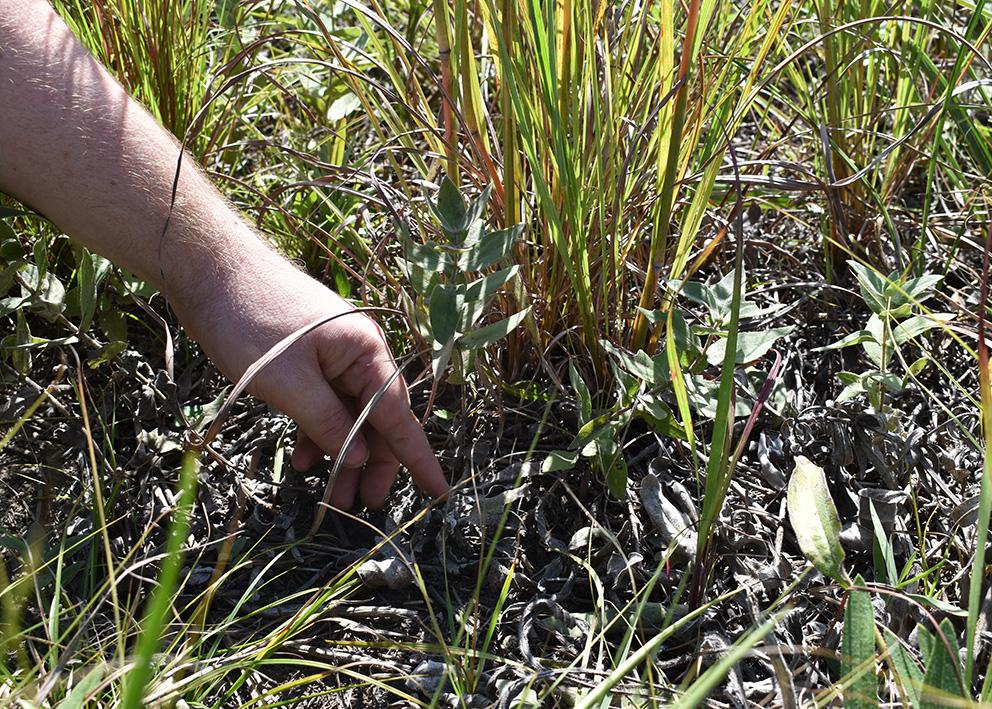
Researcher pointing to small ashy sunflower on ground
Close
Researcher pointing to small ashy sunflower on ground

Another small patch of ashy sunflower, in the line of spraying, emerged late.

Previous Next
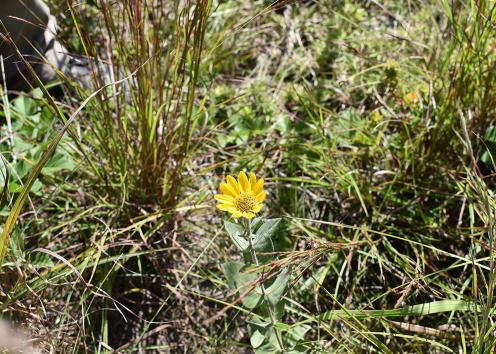
Ashy sunflower in bloom
Close
Ashy sunflower in bloom

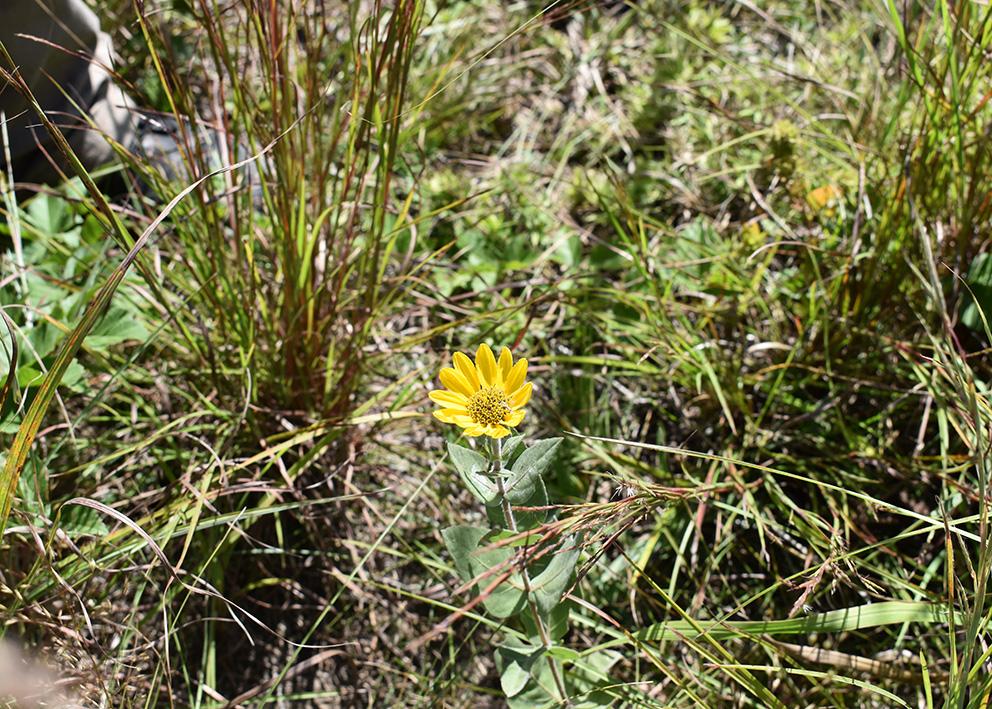
In another area, an ashy sunflower blooms late (typical bloom time July–August).

Previous Next
Take spike with white flowers
Close
Take spike with white flowers

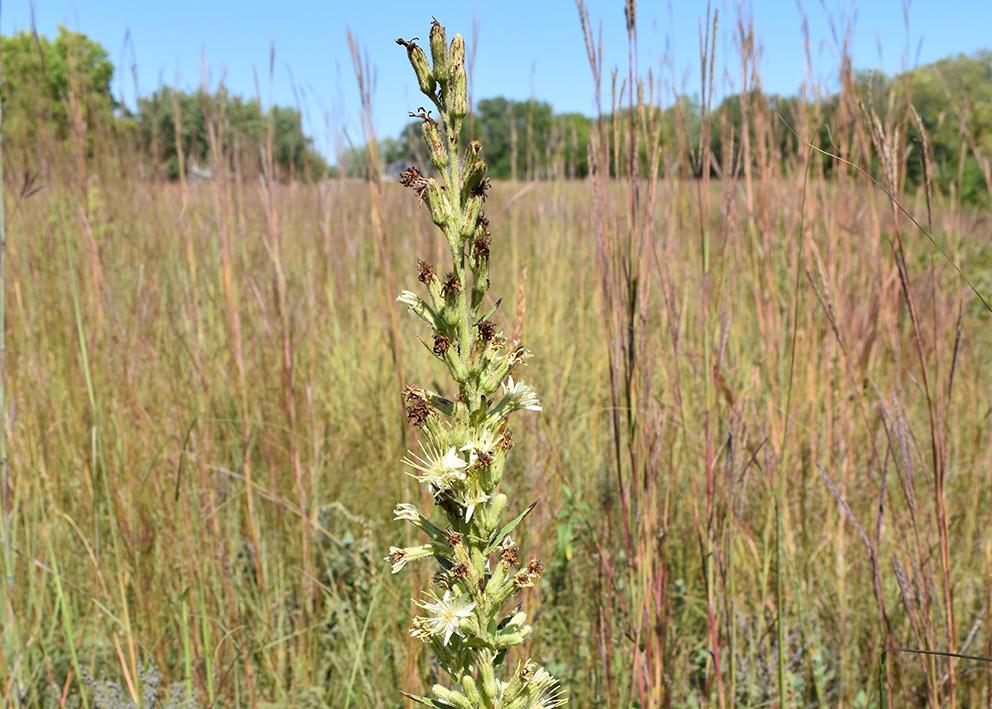
Rough white lettuce, an uncommon species and a good indicator of remnant prairie.

Previous Next
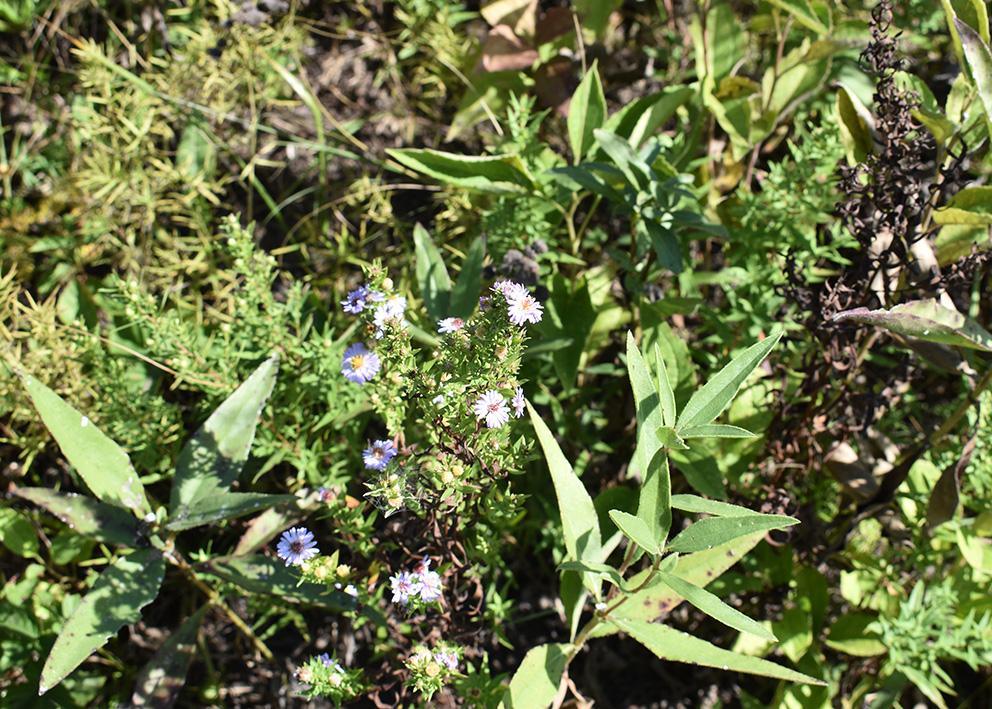
Aster with small lavender flowers in prairie
Close
Aster with small lavender flowers in prairie

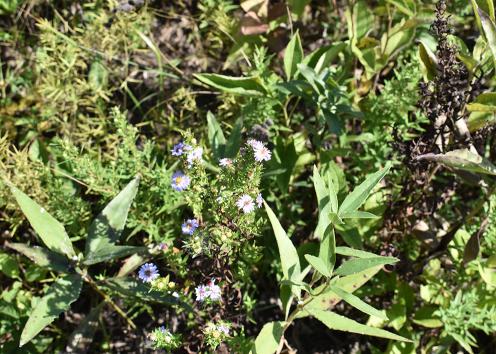
Heath aster blooming in an unsprayed patch.

Previous Next
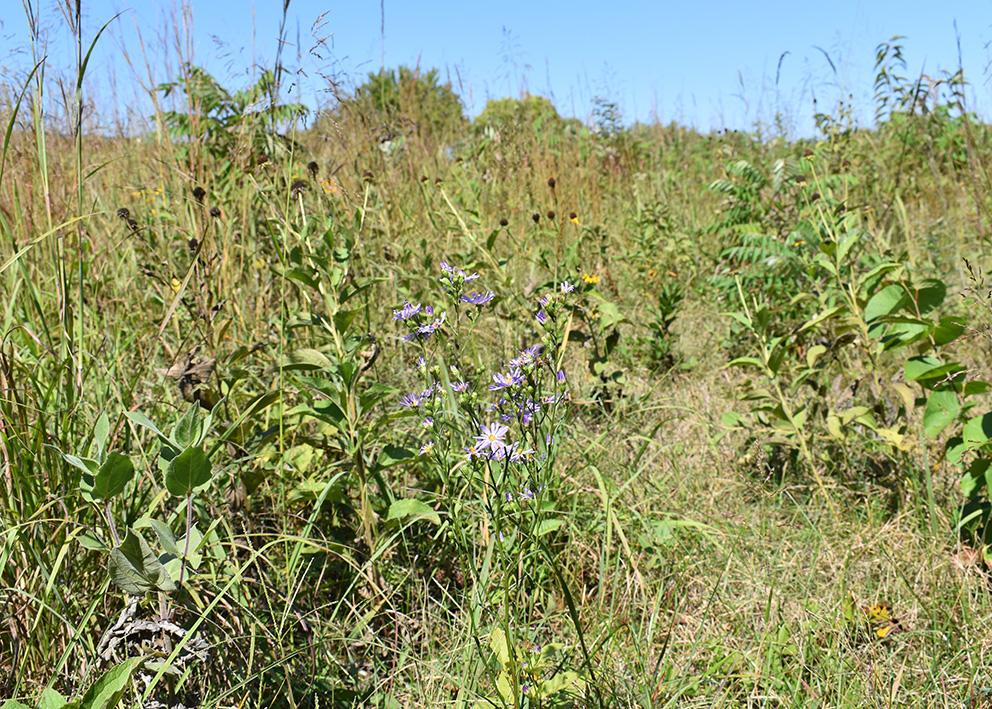
Tall, slender aster plant with lavender flowers in prairie setting
Close
Tall, slender aster plant with lavender flowers in prairie setting

Sky blue aster in bloom, a good indicator species for remnant prairies

Previous Next
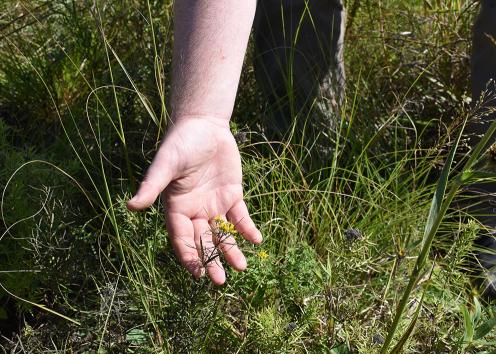
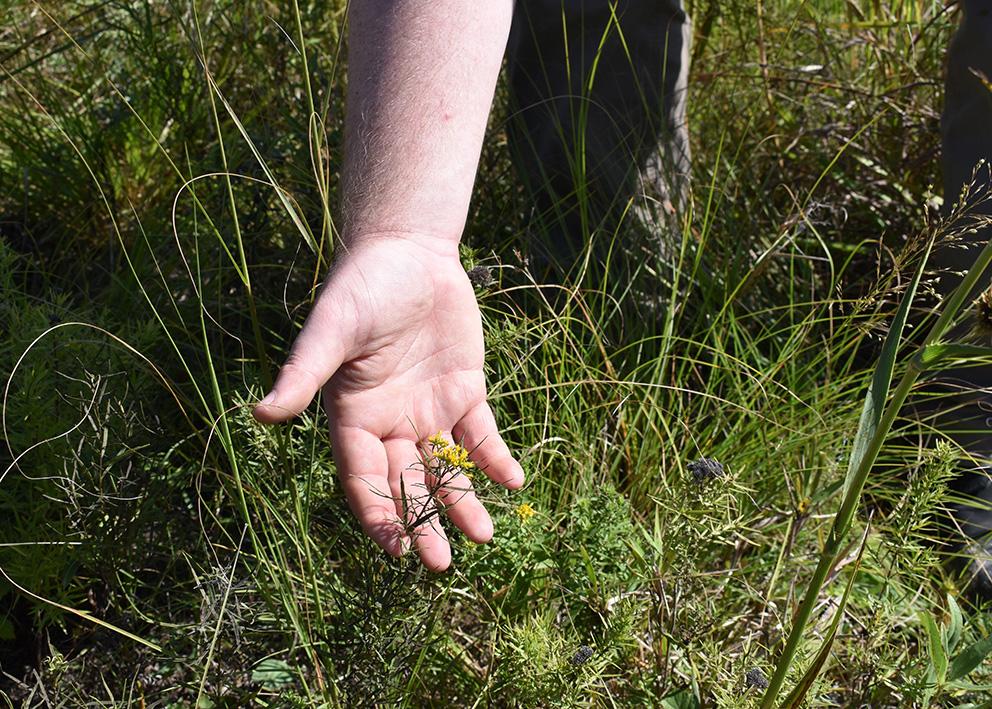
Researcher's hand showing small goldenrod bloom
Close
Researcher's hand showing small goldenrod bloom

The prairie holds several species of goldenrod, including this grass-leaved goldenrod.

Previous Next
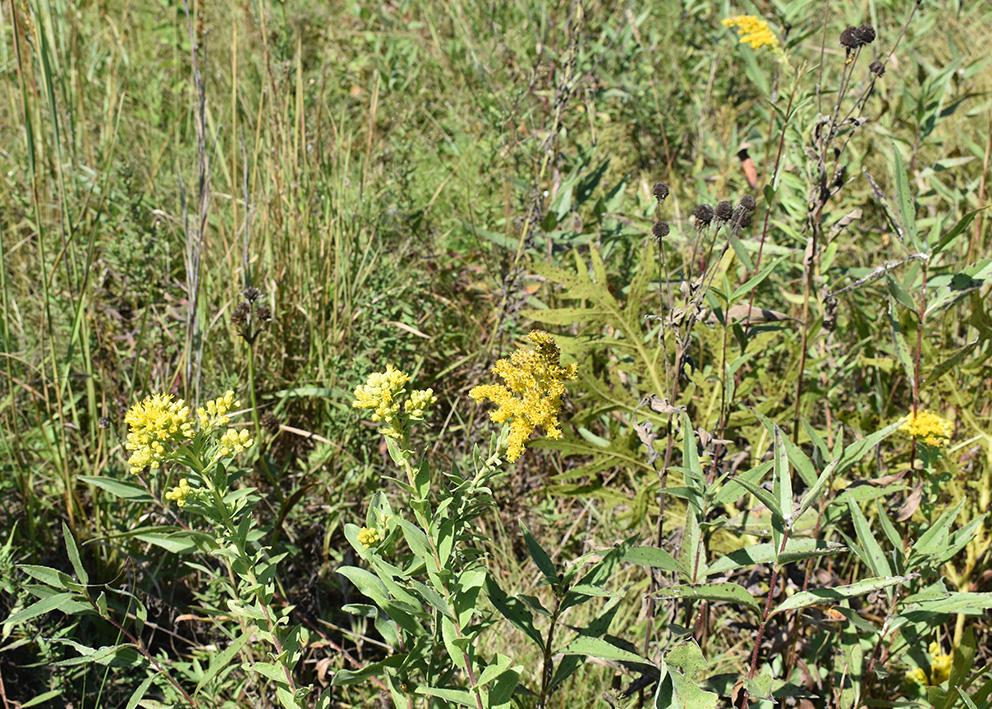
To different species of goldenrod in bloom in prairie setting
Close
To different species of goldenrod in bloom in prairie setting

Rigid goldenrod and tall goldenrod at proper blooming stage in an area missed by herbicide.

Previous Next
KU The University of Kansas KU The University of Kansas
Takeru Higuchi Hall
2101 Constant Ave.
Lawrence, KS 66047
Bus Routes: a, b, c
biosurvey@ku.edu
785-864-1500
facebook instagram twitter youtube


  • Visit KU
  • KU Admissions
  • KU Endowment
  • KU News
  • KU Events
  • KU Careers
  • KU Alumni Association

Nondiscrimination statement

Accessibility| Website support| CMS login
KU degree stats logo KU degree stats img

© 2025 The University of Kansas

The University of Kansas prohibits discrimination on the basis of race, color, ethnicity, religion, sex, national origin, age, ancestry, disability, status as a veteran, sexual orientation, marital status, parental status, gender identity, gender expression, and genetic information in the university's programs and activities. Retaliation is also prohibited by university policy. The following person has been designated to handle inquiries regarding the nondiscrimination policies and procedures and is the Title IX Coordinator for all KU and KUMC campuses: Associate Vice Chancellor for the Office of Civil Rights and Title IX, civilrights@ku.edu, Room 1082, Dole Human Development Center, 1000 Sunnyside Avenue, Lawrence, KS 66045, 785-864-6414, 711 TTY. Reports can be submitted by contacting the Title IX Coordinator as provided herein or using the Title IX online report form and complaints can be submitted with the Title IX Coordinator or using the Title IX online complaint form.

The University of Kansas is a public institution governed by the Kansas Board of Regents.